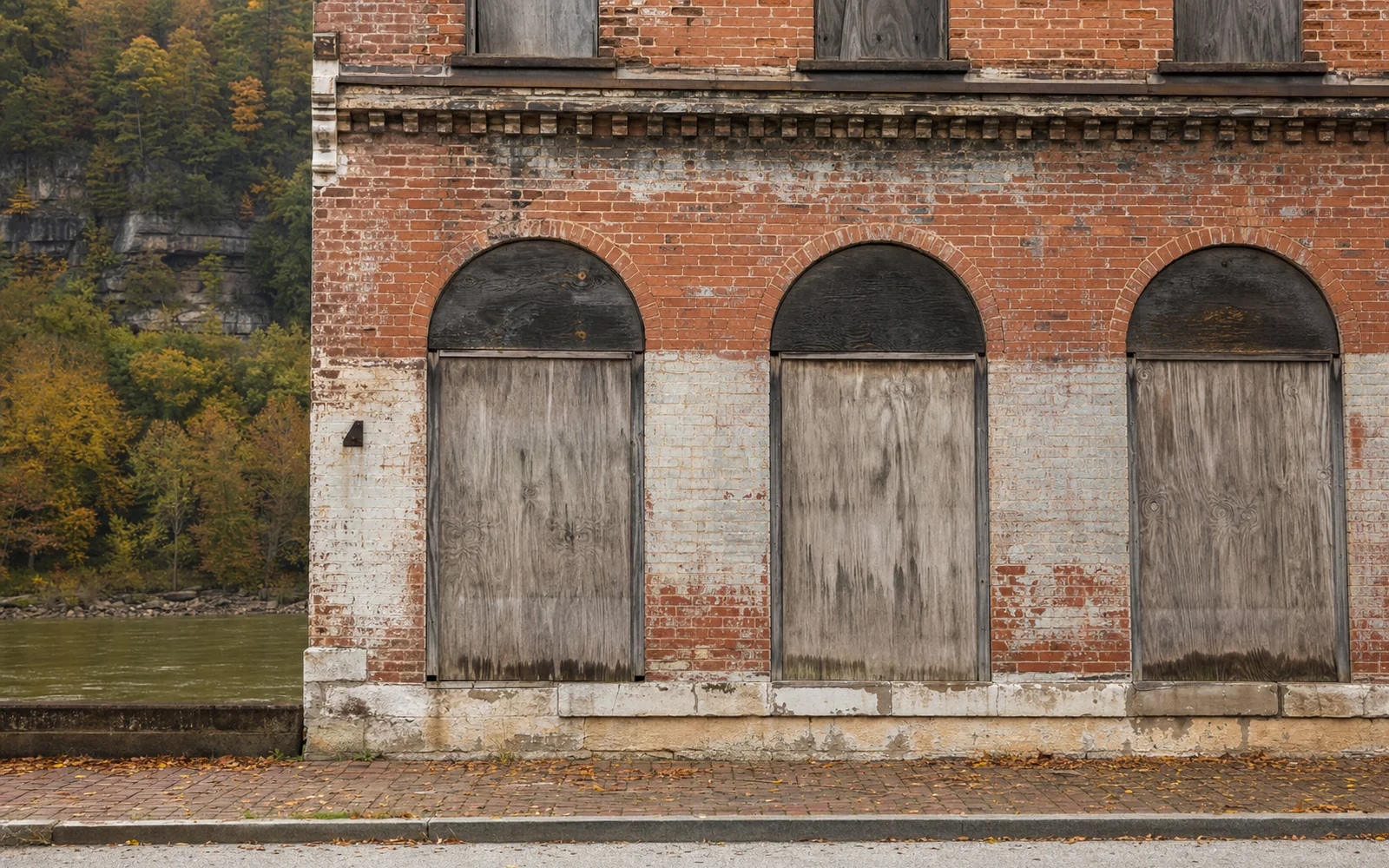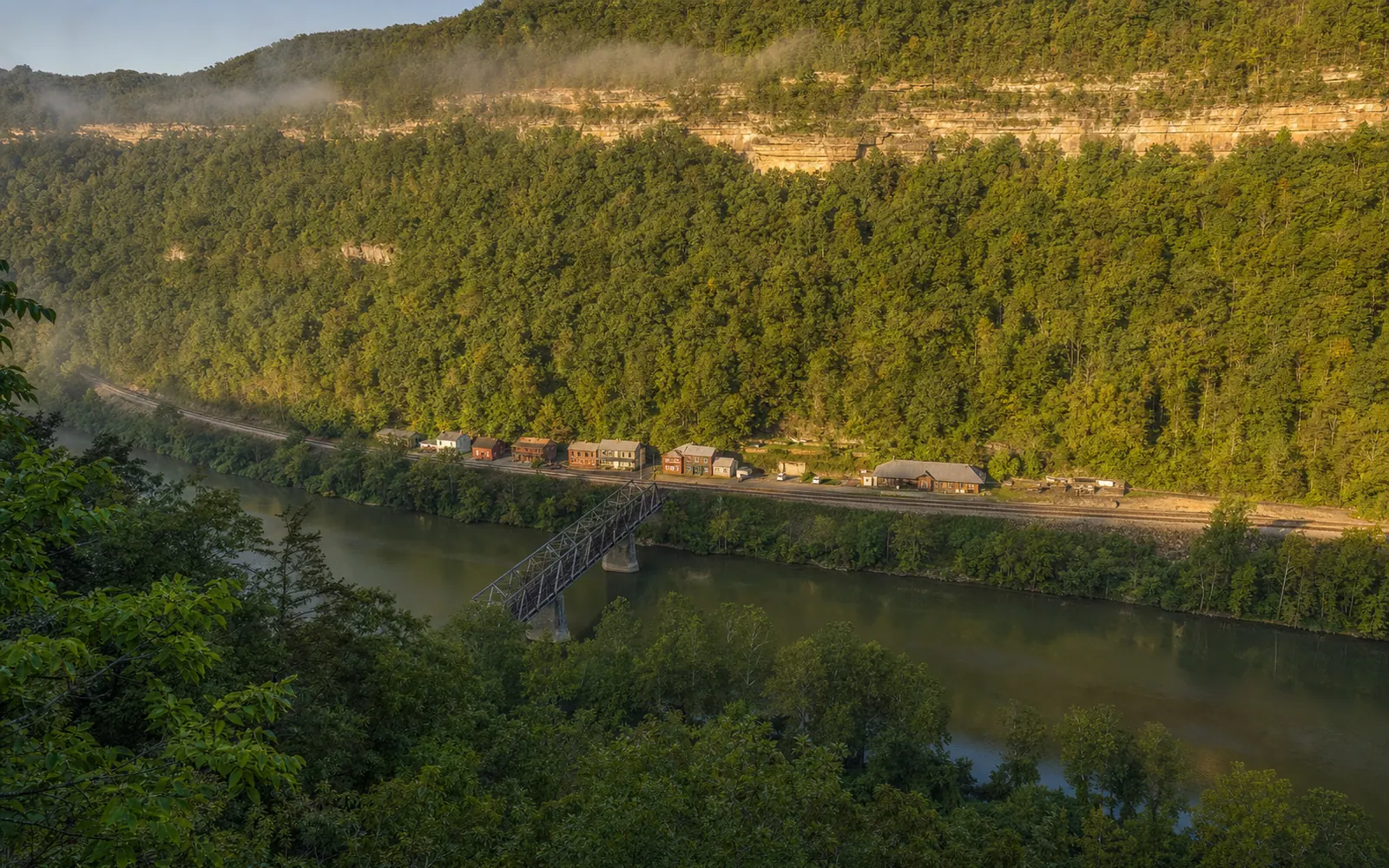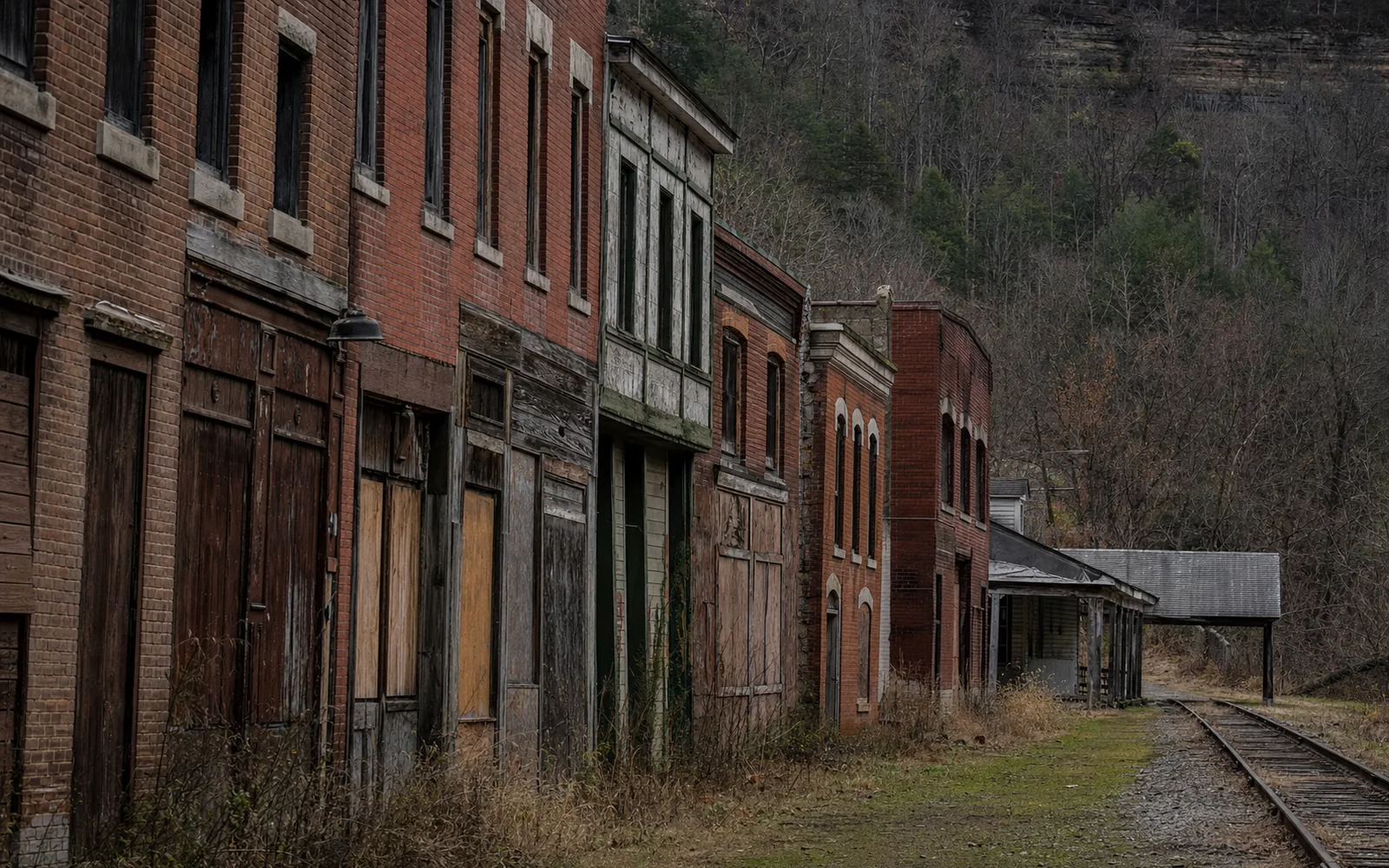
Thurmond, the old boom town at the bottom of the New River Gorge, is fighting the National Park Service to keep its historic buildings standing, and as of September 22, 2026, no lawsuit has been reported filed. The town council voted on August 11 to seek free legal help, act as a plaintiff against the Department of the Interior and ask for a temporary restraining order. On September 5 WV Explorer reported that Bailey & Glasser LLP had agreed to represent the town pro bono, with Charleston attorney Benjamin Bailey as attorney of record.
The clock is ticking. The Park Service's letter of July 15, as Lootpress reported it, says demolition is "tentatively scheduled to begin in November 2026," and on September 16 WOAY reported that the plan was accelerating and that demolition "could begin as soon as November." The good news for visitors: the depot and the brick Commercial Row, the buildings most people come to see, are on no published demolition list. How a town of five people ended up facing the agency that owns about 80 percent of it is a story worth knowing before you go.
Published September 22, 2026. Status checked September 22, 2026.
What is Thurmond, and why does it matter?
Thurmond sits on a narrow shelf at the bottom of the gorge, squeezed between the river and the old Chesapeake and Ohio main line, now run by CSX. Capt. William Dabney Thurmond took the 73-acre site as payment for surveying work in 1873, and the town took off after the railroad bridged the river in 1888 and 1889. For a place so small, it moved an astonishing amount of freight. "By 1910, Thurmond produced $4.8 million of freight revenue for the C & O, almost 20 percent of its revenue," its 1983 National Register nomination says, more than Richmond or Cincinnati. The census counted 462 people at the 1930 peak and five in 2020 (the Charleston Gazette-Mail counted six in August 2026).
The Thurmond Historic District was listed on the National Register on January 27, 1984. It's still an incorporated town, with Mayor Melanie Dragan and a council that meets on the second Tuesday of each month, and the only way in by car is a one-lane deck on the railroad bridge that you share with trains. The history of the gorge's coal towns tells the boom and the decline in full.
How the demolition plan took shape, 2022 to 2025
It started as housekeeping. In May 2022 the park proposed $1.2 million from the Great American Outdoors Act to remove "derelict structures and abandoned buildings" across the park. The same year, a survey the Park Service commissioned recommended "preservation and stabilization for most of the 13 contributing structures evaluated in Thurmond," WV StateWire later reported, and its consultants warned that without regular maintenance "the residences of Thurmond will continue to deteriorate until they are beyond saving."
The formal process ran from a comment period in December 2023 and January 2024 through an environmental assessment in October 2024, and opposition grew along the way. On February 13, 2024 the West Virginia House passed House Resolution 6 in support of Thurmond, with Delegate Elliott Pritt warning the plan would raze "over half of the remaining structures." In March 2024 the Preservation Alliance of West Virginia put the whole district on its Endangered Properties List. In March 2025 Marilyn Brown, who grew up in Thurmond in the 1950s and now lives in Oak Hill, asked the park to reconsider; her childhood home, built in 1900, was on the list.
On July 18, 2025 the acting regional director signed a Finding of No Significant Impact choosing the park's Alternative C. The Brown house came off the list. The finding also counted what Thurmond had already lost since 1984:
"...includes a total of 45 contributing structures, 39 of which remain as of the date of this decision document."
After the demolitions, the same document says, "31 or 32 contributing structures from the original National Register nomination form" would remain. The Park Service conceded that removing contributing buildings "would diminish elements of the Thurmond Historic District's historic integrity," while holding that the district would stay eligible for the Register.
Which buildings would be torn down?
The count depends on who's counting. The acting superintendent's letter of July 15, 2026, as Lootpress reported it on July 26, named 12 structures to be demolished under a contract through the Bureau of Indian Affairs' Multiple Award Task Order Contract program. Inside the historic district, the Finding of No Significant Impact lists the Charles Ashley outbuilding and garage, the May Bagoski House, the Harold Smith House, the Sidney Allen Ward House, the Wedzel Young House, the Erskine Pugh Rental House, the James Humphrey Sr. House, the McGuffin Garage, the Phillip A. McClung/Meadows House and the Dun Glen Building/Ranger Station. Outside Thurmond it adds the Prince Brothers General Store and a pool chemical building at Camp Brookside.
Other tallies run higher. Preservation Thurmond told MetroNews on August 16 that about 20 buildings are slated: 12 released for demolition bids, 3 kept outright and 5 awaiting bid release. The Gazette-Mail reported 17 structures scheduled, 14 of them in Thurmond or at the neighboring Dun Glen site.
What stays is clearer. The Marilyn Brown House, the Thurmond Ice House and the Dun Glen Ark are retained. The Tom Kelly House, the Dun Glen Boat Storage Rack and the Dun Glen Mini Ark survive only if someone proposes a workable lease, WV Explorer reported on September 5. On August 31 the park announced competitive leasing of historic and non-historic structures parkwide (contact [email protected]), though the announcement as reported didn't name Thurmond.
What each side says
The Park Service's reasons, as WV StateWire summarized them, are "deterioration, safety concerns, vandalism and the cost of maintaining properties that are not needed for park operations." The park's Thurmond history page, updated April 14, 2026, describes its upkeep of Commercial Row and the stabilization of "over twenty other park-owned structures" since 2003.
On the town's side, the resolution the council passed was drafted by member Tighe Bullock, a Charleston businessman whose parents served as mayor; he was in England the night of the vote, the Gazette-Mail reported. After the law firm signed on he called the fight "Truly a David and Goliath story," and pointed to what he sees as a double irony: the Interior Department is the country's lead agency for historic preservation, and the money for the demolitions, he said, comes from the Great American Outdoors Act.
Holly Clark, president of Preservation Thurmond, told WV Explorer that "Thurmond's history is irreplaceable, and once these structures are gone, they cannot be brought back." She has also said the acting superintendent, Eric G. LaPrice, "suggested that we help spread the word about leasing," and her group has been looking for investors. Preservation Thurmond posts its updates on Facebook.
The church where the national river was agreed
There's an old irony here too. In August 1977 Doug Maddy of the Fayette County Chamber of Commerce brought every side of the argument over the gorge's future together at the church in Thurmond, according to the Park Service's own administrative history. The facilitator, Destry Jarvis, proposed making the gorge a "national river," and the meeting ended in "a fragile agreement." Congress created New River Gorge National River the next year, and that unit became today's national park in 2020. The story of how the national river became a park picks up from there. Rafting has a Thurmond chapter as well: the region's first commercial rafting company worked from the Dun Glen site across the river, as the rafting story tells.
Can you still visit Thurmond? Is the depot being torn down?
Yes, you can visit, and no, the depot isn't going anywhere. The 1904 depot, restored as a visitor center, is on no published demolition list, and neither are the brick Commercial Row buildings, including the old bank, or the CSX coaling tower. Standing on that short street between the cliffs and the tracks is still one of the most atmospheric stops in the gorge, and this fall is a fine time to see the town as it stands today. The park lists the depot as open on weekends through October 25, staffing permitting, before it closes for the winter on October 31.
One change to plan around: the Rend Trail out of Thurmond closed on August 3, 2026 for an $11.8 million rehabilitation expected to last into late 2027. The Thurmond visitor guide has hours, directions and the rules around the active tracks.
What happens next
These are the open questions, and this story will be updated as each is answered.
- Will Bailey & Glasser file a complaint or ask a federal court for a restraining order before work begins?
- Will lease proposals arrive for the Tom Kelly House and the Dun Glen structures, and is there a deadline? None has been published.
- Has the demolition contract been awarded, and will the November 2026 start hold?
- Which five structures make up the "awaiting bid release" group in Preservation Thurmond's count?
Each development gets a dated entry on the what's new page, and the national park guide covers everything else worth seeing in the park.