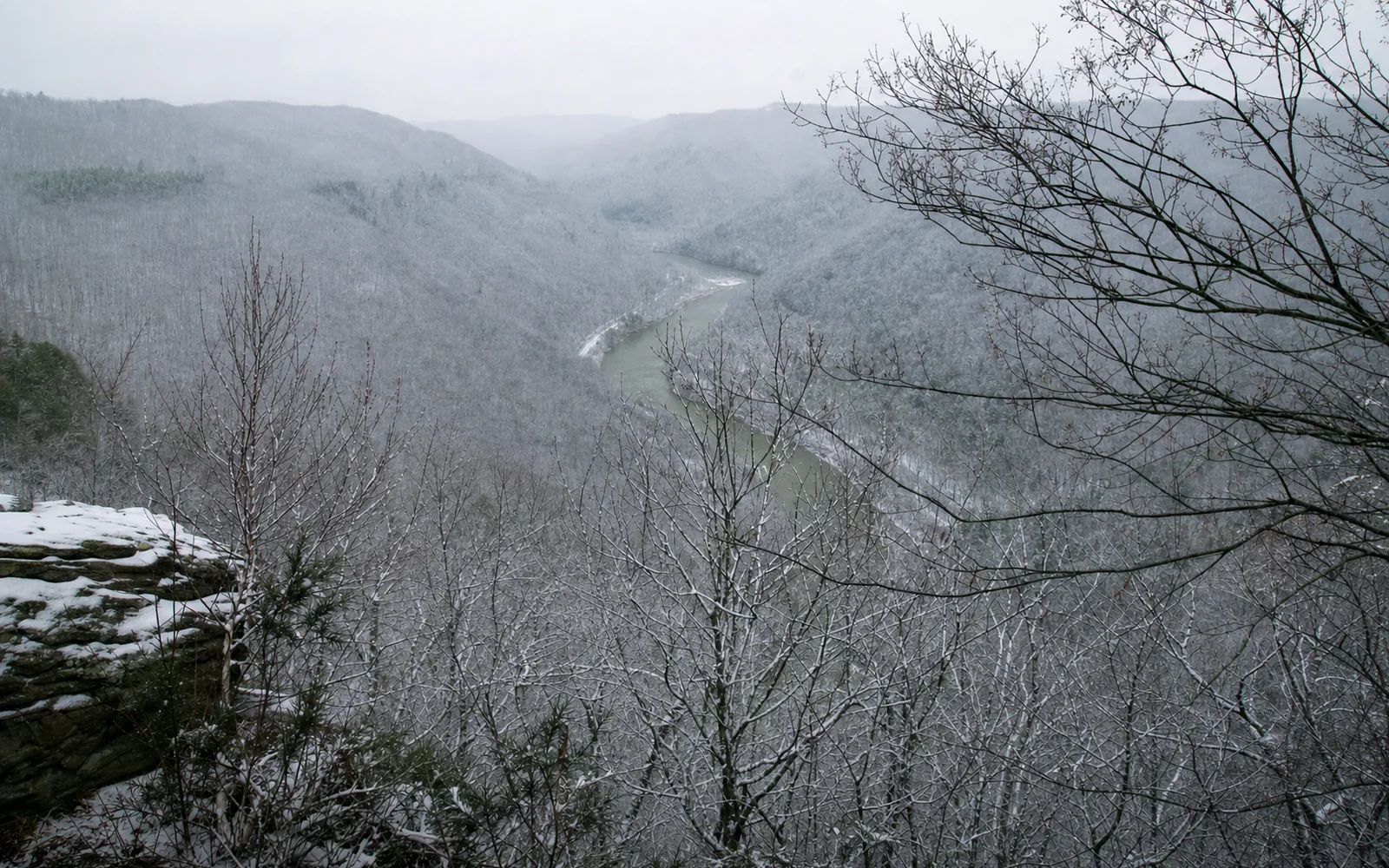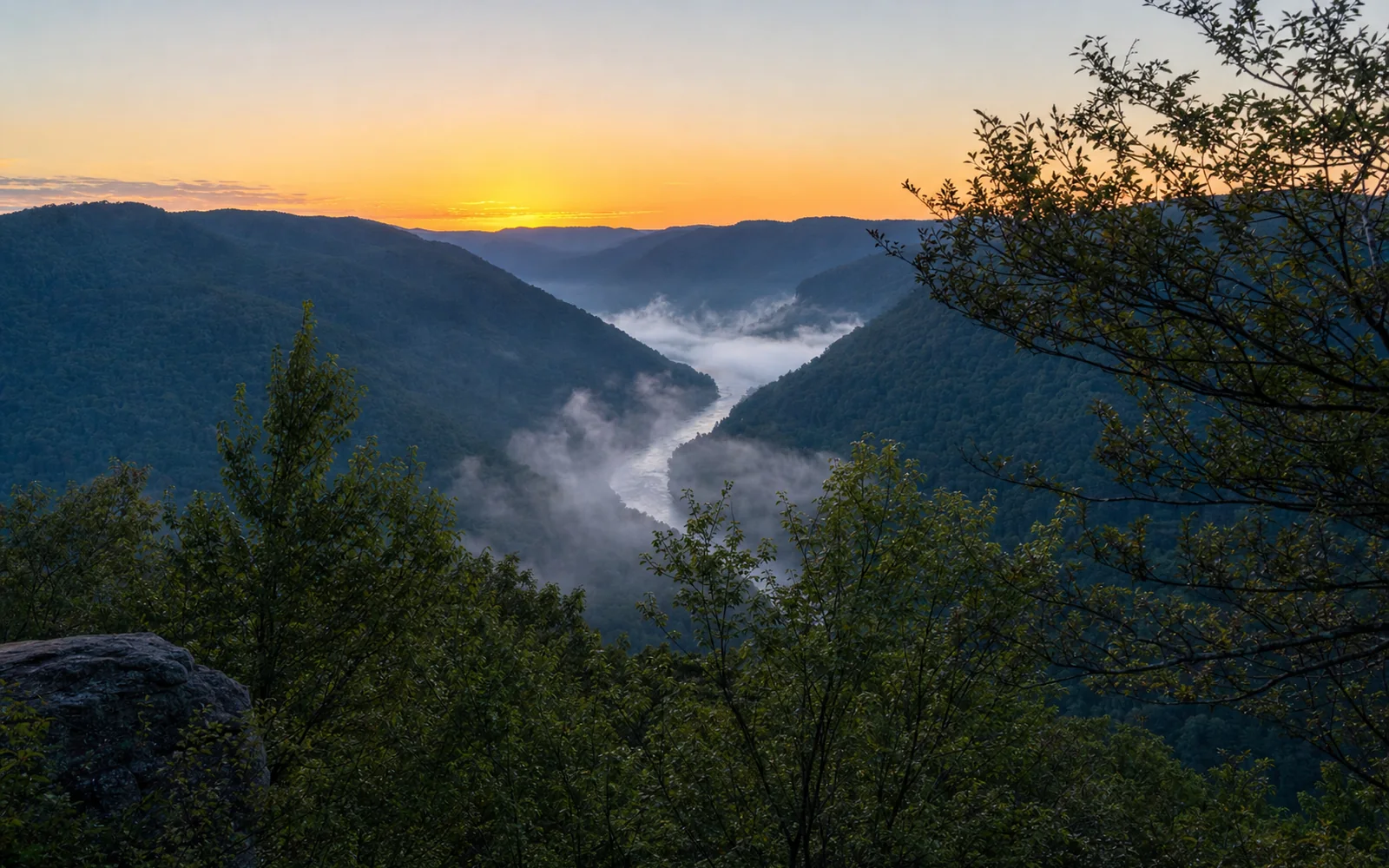
The gorge's national park title was a long time coming. New River Gorge became a national park on December 27, 2020, when the New River Gorge National Park and Preserve Designation Act was signed into law inside H.R. 133, the Consolidated Appropriations Act, 2021, making it the 63rd national park and the 20th national preserve. The gorge had already been in the National Park System since November 10, 1978, when President Carter signed the law creating New River Gorge National River.
The story behind those two dates is a good one, full of dam fights, river rats and a deal struck in a church at the bottom of the gorge. And here's a twist: in the 1970s the gorge couldn't qualify as a national park at all. (One more thing worth clearing up: the Great American Outdoors Act, often mentioned alongside the new name, didn't create the park. It paid for repairs.)
Why wasn't the gorge a national park in 1978?
It started upstream, with a fight in the 1960s and 1970s against Appalachian Power's Blue Ridge pumped-storage dams in Virginia and North Carolina. West Virginians joined through the Coalition to Save the New River, and one of its original members was Jon Dragan of Wildwater Expeditions Unlimited, the rafting company founded at Thurmond in 1968. The rafters' side of the story is in how rafting changed Fayetteville, one of the site's longer stories on the gorge.
In 1975 the federal Bureau of Outdoor Recreation held public meetings in Hinton, Charleston, Fayetteville and Beckley. That May, Assistant Interior Secretary Nathaniel Reed pointed to the Ozark and Buffalo national rivers as models, and Dragan argued for something between a national park and a wild and scenic river, according to the Park Service's 2008 history of the unit. Locals wanted more. The Fayette County National Park Committee campaigned in 1976 and 1977 under the slogan "National Park designation or Nothing." The problem was simple: the gorge "did not qualify as a national park because it contained active mines and an active railroad."
The deal in a Thurmond church
In August 1977 Doug Maddy, executive director of the Fayette County Chamber of Commerce, called every side to a meeting in a church at Thurmond, the old railroad town on the river. Dragan helped organize it. The facilitator, Destry Jarvis, proposed national river status, and by the end of the session the park's history records "a fragile agreement." On March 20, 1978 the Fayette Tribune reported that the Chamber had endorsed national river status unanimously.
Then the gorge caught a ride on a much bigger bill. Rep. Phil Burton of California was assembling an omnibus parks bill of some 230 provisions; a joint House-Senate hearing met on October 3, 1978, the Senate passed the bill with changes on October 10 and the House passed the amended version on October 13. Carter signed the National Parks and Recreation Act of 1978, Public Law 95-625, on November 10. It authorized twenty new units of the park system, New River Gorge National River among them, with Sen. Robert C. Byrd, Sen. Jennings Randolph and Burton credited for getting it done.
What the 1978 national river law did
It drew a boundary around "roughly 70,000 acres of land along nearly 50 miles of the New River, between Hinton and Fayetteville," and it "specifically permitted hunting within the unit's boundaries, in line with local hunting custom." It also kept the Park Service out of regulating "watercraft services," which is why the state, not the federal government, still licenses commercial rafting under West Virginia Code section 20-2-23a. When you book a raft trip here, that's the arrangement you're riding on.
At first the Park Service wasn't meant to own much of it. The 1983 General Management Plan called for owning "no more than a few thousand acres," with easements and zoning doing the rest. In January 1984 the park owned 540 of 62,023 acres, under 1 percent; by 2006 it owned 52,192 of 72,189 acres, or 72 percent, with park staff describing every purchase as from a willing seller.
The national river years, 1980 to 2019
The park started small. Jim Carrico, the first superintendent from 1980 to 1985, opened its first office in 1981 in the basement of his own home before it moved to Main Street in Oak Hill, and by 1985 the staff numbered about twenty. The first General Management Plan came out in March 1983. In 1988 Congress added the Gauley River National Recreation Area and the Bluestone National Scenic River to the park's charge, Canyon Rim Visitor Center opened in 1991, and Sandstone followed in the early 2000s.
In 1980 the park counted 316,000 land-based visitors, 300,000 of them sightseers. Through the 2010s it drew between about 1.07 million and 1.23 million recreation visits a year. The Park Service's own history put it simply: "The park and the area surrounding it have grown tremendously since release of the first GMP in 1983."
When did New River Gorge become a national park?
Sens. Shelley Moore Capito and Joe Manchin introduced S.2555, the New River Gorge National Park and Preserve Designation Act, on September 26, 2019, and Reps. Carol Miller, Alex Mooney and David McKinley introduced the House version, H.R.4610, on October 4. Not everyone cheered. Hunters pushed back at a hearing in February 2020.
"We are opposed to the loss of over 4,000 acres of public hunting land."
The bill never passed on its own. Its text was folded into H.R. 133, the year-end spending and relief package, which President Trump signed on December 27, 2020. The Fayette Tribune, in a December 25, 2020 article reprinted on Sen. Capito's site, laid out the deal: 7,021 acres of national park, where hunting ends, and 65,165 acres of national preserve, where hunting and fishing continue; 301 Lower Gorge acres kept open to hunting and 368 Grandview acres newly opened; and authority to buy 3,711 more acres and up to 100 acres for parking. The superintendent at the time, Lizzie Watts, kept expectations modest: "It won't mean a great deal of change in how the park is managed."
What changed with the national park designation?
Less than you'd think, and the best part didn't change at all: there's still no entrance fee. "This is a no-fee park," Eve West, the park's chief of interpretation, told Outdoor Life in 2021, and the fees page still said so on September 22, 2026. The boundary, the rafting licenses and the trails stayed as they were.
The hunting map did change. Outdoor Life put the net loss of public hunting land at "as close as anyone can figure 3,715 acres," around visitor centers, parking lots and historic mining towns, offset by roughly 3,700 huntable acres to be added near Beury Mountain Wildlife Management Area; 45 acres there joined the preserve on January 17, 2023. If you're hiking in fall, this matters to you: deer archery season in the preserve runs September 26 to December 31 in 2026, and the Park Service's hunting page maps where hunting is allowed and lists Grandview, Camp Brookside, Sandstone Falls and the Lower Gorge among the closed areas. The rules and safety page has tips for sharing the woods in season.
The Great American Outdoors Act, signed the same year, is a separate law that pays for repairs, and you can see its work around the park. It funded about $280,000 for 30 historic hearths and picnic shelters at Grandview in 2021, a proposed $1.2 million to remove derelict structures, and about $11.8 million from its Legacy Restoration Fund to rebuild the Rend Trail and its five trestles near Thurmond, a job that closed the trail on August 3, 2026 until late 2027.
Did the new name bring more visitors?
Visits jumped, though the new name arrived right as the pandemic sent everyone outdoors, so it's hard to say which did more. By the Park Service's recreation-visit counts, the park had 1,054,374 visits in 2020 and 1,682,720 in 2021. The Park Service reported about 1.6 million for 2022 and 1.7 million for 2023, then a record. WVVA reported 1,811,937 for 2024, and 2025 set another record, about 1.96 million by one count.
Officials credited part of the fall 2024 surge to travelers displaced from the Smokies and the Blue Ridge by Hurricane Helene, MetroNews reported. The crowds come with growing pains: in October 2025, five years on, 100 Days in Appalachia described "a growing divide" in the gorge over what tourism has done to housing and daily life. And the town where the 1977 deal was struck is now in its own dispute with the park. Thurmond's council voted on August 11, 2026 to seek counsel against planned demolitions of park-owned buildings, which WOAY reported on September 16 could begin as soon as November; no lawsuit had been reported filed as of September 22. The dispute is told in the Thurmond demolition story.
Where to see this story today
Start at Canyon Rim Visitor Center, open since 1991, for the exhibits and the bridge view, then drive out to Grandview, where the 2021 repair money went into the historic hearths and picnic shelters, and look down on the river's great horseshoe bend. For the scene of the 1977 deal, head down to Thurmond, where the depot opens weekends through October 25 this fall. Visitor centers, hours and closures are in the New River Gorge National Park guide, and changes since the summer floods are on the what's new page.