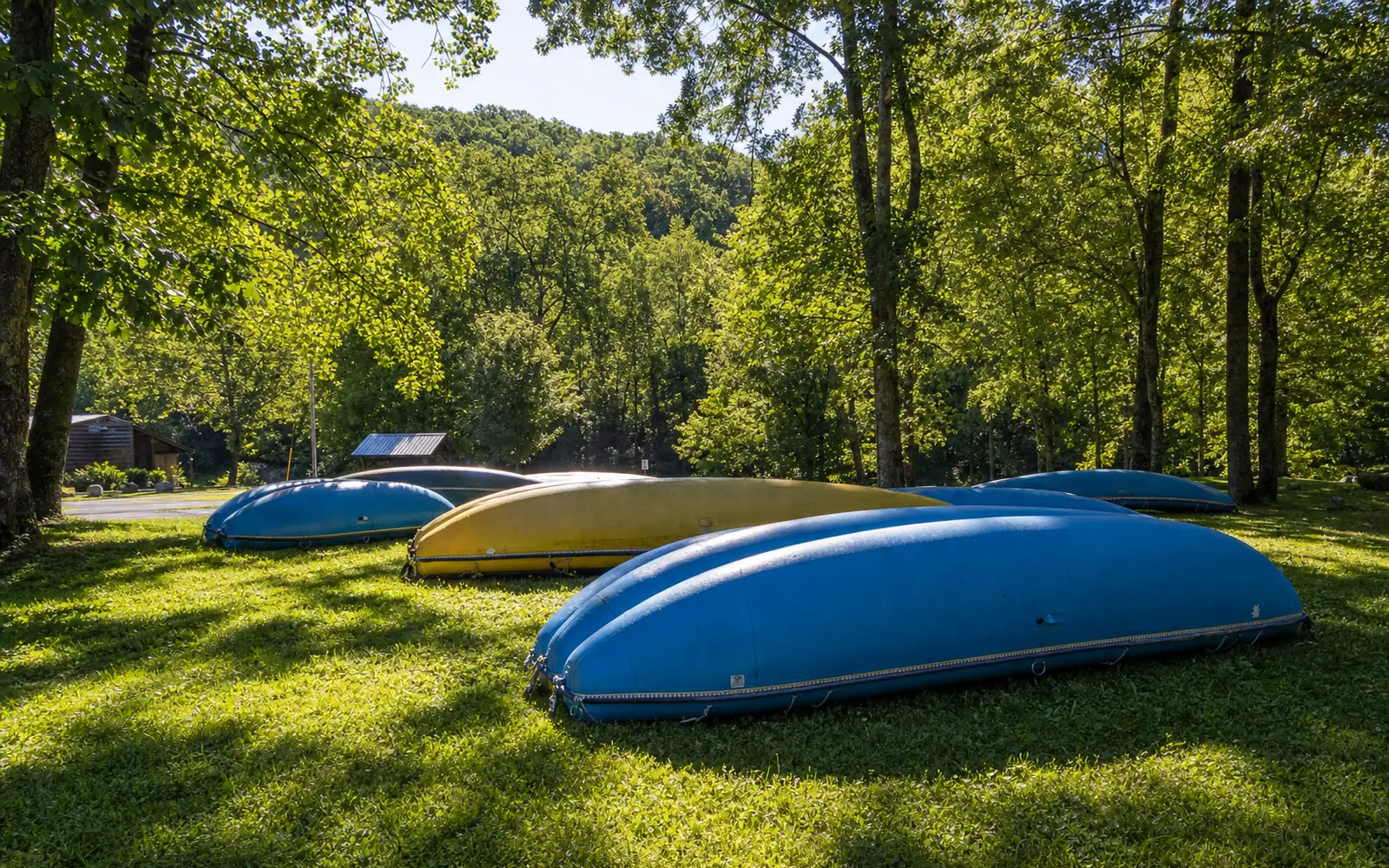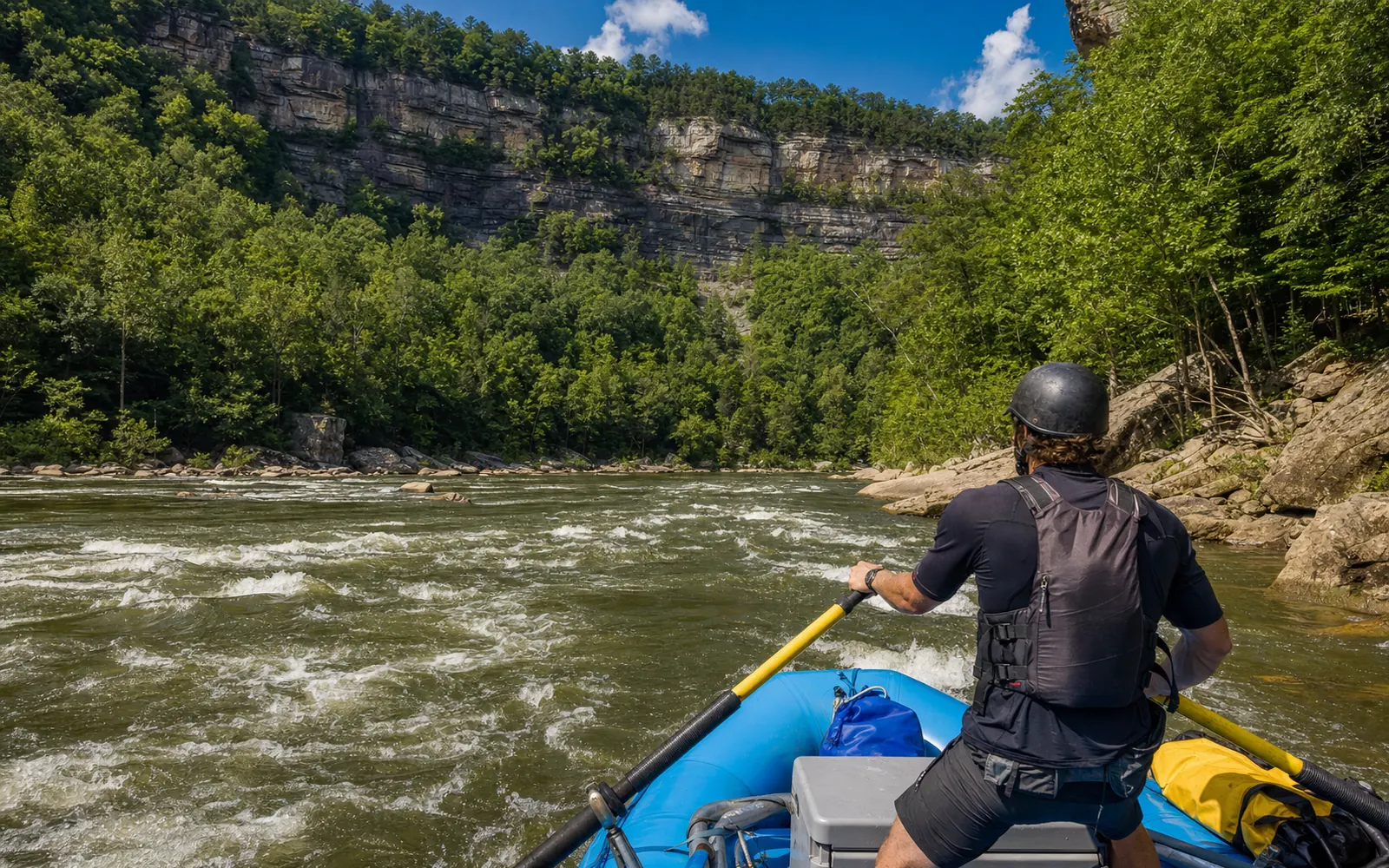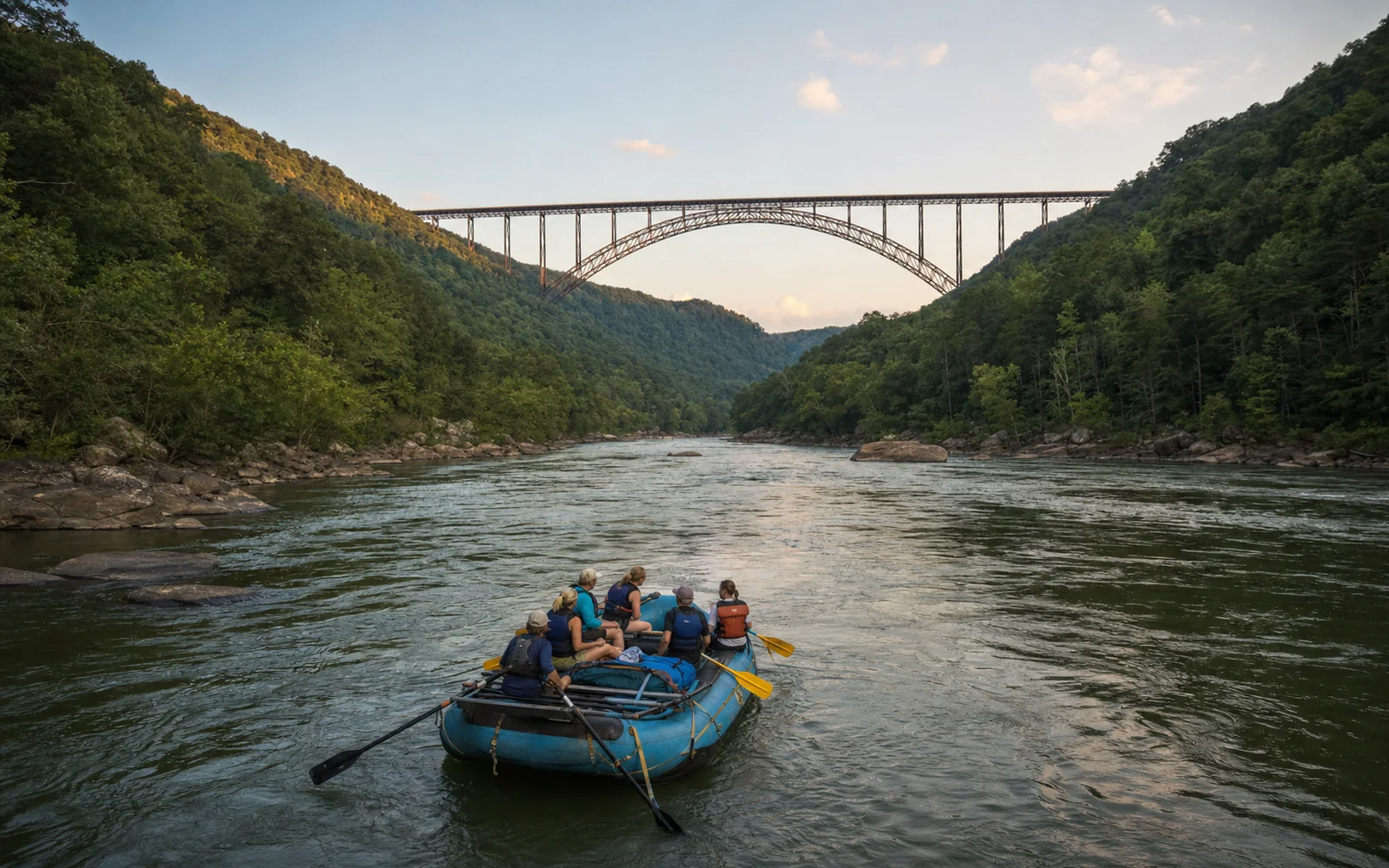
Rafting was the spark, but it didn't save Fayetteville on its own. Commercial whitewater trips began at Thurmond in 1968, just as the gorge's coal era was ending, and outfitters helped win the 1978 law that made the gorge a national river. The town grew from 1,712 people in 1970 to 2,887 in 2020. Along the way the bridge, the national river, climbing and a wave of outdoor tourism all did their part, and nobody has measured exactly how much of the comeback belongs to the rafts.
What's certain is that rafters turned up at nearly every turning point, from the first trips in Army surplus boats to the church meeting that set up the national river. It's a great story to carry with you when you climb into a raft on the New or the Gauley yourself.
Published September 22, 2026. Facts checked against sources captured September 8 to 11, 2026.
1968: the first trips from Thurmond
It began with one family. Jon Dragan, "along with his wife and brothers, started the state's first commercial rafting company, Wildwater Expeditions Unlimited in 1968," his 2005 obituary says. The West Virginia Encyclopedia calls it "the first West Virginia-based whitewater rafting company" and places it at Thurmond, the railroad town in the bottom of the gorge. A 2012 Bridge Day blog post names the four founders as Jon, Tom, Chris and Melanie Dragan, from Pennsylvania.
That first season was tiny. Fewer than 80 people ran the river with them; the company had two pickup trucks and rafts bought from an Army surplus boat company, and trips were "double guided for safety" until the early 1990s. Many of the rapid names you'll hear shouted on the New date from those early runs. A 1983 National Register nomination for Thurmond lists "the white water owner" as owner of the old Dun Glen Hotel site across the river, then Wildwater's base. Wildwater itself is no longer on the state's active outfitter list.
The Dun Glen site now figures in a different fight: a Park Service building there is on the demolition list covered in the Thurmond demolition story.
The companies that followed
Others piled in quickly, and the early days sound like a lot of fun. Mountain River Tours got going in the late 1960s or early 1970s, and its founding raft was a homemade craft called "Turkey," according to WV Explorer. The Rivermen started with a campground at Concho, above Thurmond; "We didn't have running water," co-founder Brian Campbell told Visit Southern West Virginia. Class VI River Runners, Songer Whitewater and Appalachian Wildwaters followed in the 1970s and 1980s, and ACE dates itself to 1980.
The state stepped in early. It capped rafting licenses at 25 companies in the early 1970s, and today West Virginia Code section 20-2-23a gives a state whitewater commission control of commercial rafting, with 10-year licenses, a $500 annual fee per river and a moratorium on new licenses on the busiest sections of the New and Gauley. That setup dates to 1978, when the act creating the national river "specified that the Park Service would not regulate 'watercraft services'," so rafting stayed a state matter inside a federal park.
Rafters and the fight for a national river
The outfitters didn't just watch the park happen; they helped build it. The Park Service's 2008 administrative history places Dragan among the original members of the Coalition to Save the New River, formed in the early 1970s against the Blue Ridge dam project upstream, and records representatives of "Mountain River Tours and Wildwater Unlimited" at an early anti-dam meeting. In May 1975 Dragan, "operator of a commercial whitewater company and resident in the gorge," argued for something between a national park and a wild and scenic river.
In August 1977 the Fayette County Chamber of Commerce's director, Doug Maddy, convened all sides at the church in Thurmond, with Dragan among the organizers; facilitator Destry Jarvis proposed "national river" status and the meeting ended in "a fragile agreement." President Carter signed the law creating New River Gorge National River on November 10, 1978. By 1981 Dragan was writing to the Corps of Engineers to ask for a day's notice of Bluestone Dam releases, because "the whitewater industry has grown in the last ten years." The history of the national river and the national park carries the rest of that story.
The 1980s: a slump, then the Gauley
Rafting "slowed in the early '80s, mainly due to the deep national recession," WV Explorer writes, and the outfitters answered with "Whitewater Wednesday," an annual river trip for legislators. (Few lobbying tactics beat a faceful of whitewater.) Then the Gauley opened up. The Corps began scheduled fall releases from Summersville Dam in the mid-1980s, and Congress made whitewater recreation an official purpose of the dam, in 1985 according to the Park Service's timeline. The Gauley River National Recreation Area followed on October 26, 1988, and its fall release weekends still pull paddlers from all over every September and October; the Gauley season guide has the details.
How big did rafting get, and how big is it now?
From fewer than 80 customers in 1968, commercial rafting in West Virginia peaked at about 250,000 a year somewhere between the early 1990s and early 2000s. It has since fallen by more than half, in line with a nationwide decline. In 2019, industry experts told National Geographic, about 103,000 commercial trips brought the state about $30 million, with independent boaters adding $5 million to $10 million. The West Virginia Encyclopedia put participation at "over 100,000" a year in 2024, about 20,000 of them on the Gauley's 22 release days.
Jon Dragan had a bigger number in mind. Talking to a Park Service interviewer on September 9, 2004, he estimated the industry "generates 75 to 80 million bucks a year," a founder's guess rather than a study.
What happened to the town
Fayetteville's census counts fell from 1,952 in 1950 to 1,712 in 1970, then jumped to 2,366 in 1980 and reached 2,887 in 2020. The last coal mine in the gorge closed in the early 1960s, as CBS News put it, just as rafting began; Kaymoor, the best known, shut in 1962. By 2020 the number of Fayette County coal miners had been cut in half, to about 600, National Geographic reported.
That 1970s jump is tempting evidence, but a lot happened in that one decade. The 2013 National Register nomination for the New River Gorge Bridge counts Fayette County's population up 17.3 percent from 1970 to 1980 and Fayetteville's up "over 38%," and credits the bridge. The same ten years brought the early outfitters, the license cap, the bridge's 1977 opening and the 1978 national river, and the county's visitor bureau adds that the bridge and highway work cut the drive from Pittsburgh from 7 hours to 4.5.
The town tells it this way in its 2024 comprehensive plan: Fayetteville ran on "the timber, coal, and railroad booms" until the 1978 national river designation, after which it "became known as an outdoor mecca." Arts, entertainment, recreation, lodging and food services now employ more town residents than any other industry. The Park Service's historians put it more broadly still, below. For the town today, see the Fayetteville town portrait.
"The park and the area surrounding it have grown tremendously since release of the first GMP in 1983. Oak Hill, Fayetteville, Summersville, and other towns have enjoyed the economic benefits increased tourism offers."
Note the word: tourism, not rafting. National Geographic's February 27, 2020 feature went furthest, and even it gave the credit to rafting, climbing, ziplines, camping and Bridge Day together, concluding that "the growing variety of outdoor recreation opportunities might be what helps bring economic stability back to the area."
The people who stayed, and the costs
The personal stories are the best part. Jay Young, who had worked at Adventures on the Gorge for 13 years, told National Geographic that when his oldest child reached school age, "my wife and I struggled to justify staying"; after finding a small private school, "We went from thinking we had to leave to educate our children the way we wanted to thinking we should never leave." Rick Johnson, a River Expeditions guide for 24 years, had a gripe instead: "All of West Virginia tourism has a lack of awareness." Shannon Blevins of the University of Virginia's College at Wise added a caution: "Tourism isn't recession-proof."
The boom has costs, too. In October 2020 residents told Mountain State Spotlight that out-of-state buyers of short-term rentals were squeezing the housing supply. The 2024 comprehensive plan counted about 100 short-term rentals inside town limits and recorded residents' worry about homes lost to them, and in October 2025 a long-form report by 100 Days in Appalachia described "a growing divide" in the gorge over tourism. Being a thoughtful guest (supporting local businesses, respecting neighborhoods) goes a long way here.
Who runs the rivers now, and how to go
Most of the old names have merged into bigger outfits. Investors combined Class VI, The Rivermen and Mountain River Tours into Adventures on the Gorge in 2007 or 2008, and it became an Aramark Destinations property in July 2024. River Expeditions absorbed Rivers, Appalachian Wildwaters and USA Raft in 2008. On September 11, 2026 the state's active list showed seven rafting companies with Fayette-area addresses: ACE Adventure Resort, Adventures on the Gorge, Alpine Ministries, Cantrell Ultimate Rafting, New and Gauley River Adventures, River Expeditions and West Virginia Adventures. The outfitter comparison helps you pick one, and the guide to rafting the New tells you what the river is like today.
So, did rafting save Fayetteville? It was the first of several things that remade the town, and the published numbers measure tourism as a whole rather than rafting alone. The best way to judge for yourself is to spend a day on the river, then head into town for dinner and notice how many people around you came for the river too.