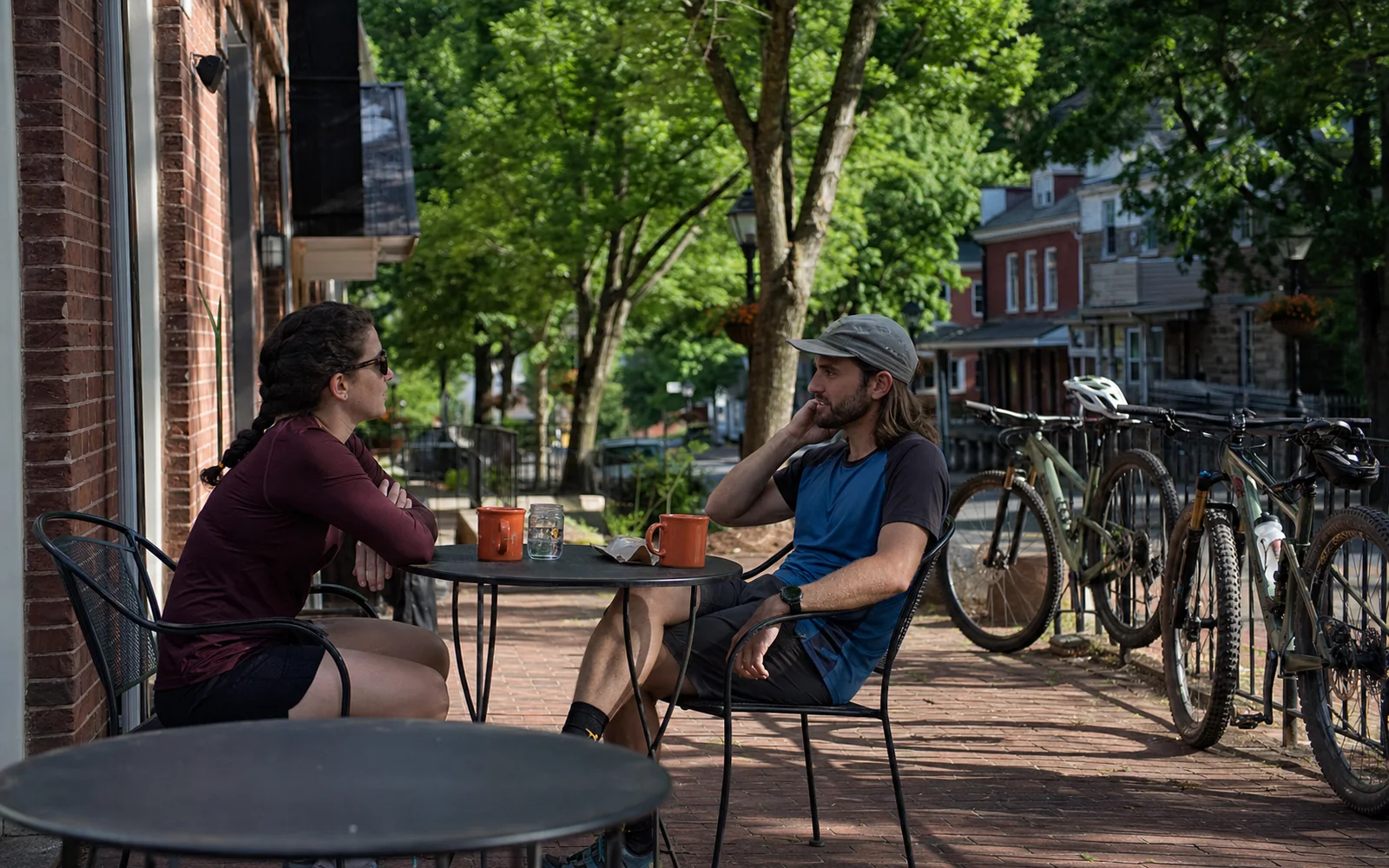
Fayetteville is the kind of small town people plan a whole trip around. About 2,800 people live here, the county seat of Fayette County in southern West Virginia, on the plateau at the south end of the New River Gorge Bridge. Walk down Court Street on a Saturday morning and you'll pass the sandstone courthouse, raft guides grabbing coffee before the bus to the put-in, climbers comparing notes on the day's sandstone walls, and mountain bikes leaning on every railing. By evening the same crowd is trading stories over pizza and craft beer. The national park's Canyon Rim Visitor Center is about a mile away, just across the bridge.
Coal, timber and the railroad built the town; since the gorge became a national river in 1978, rafting, climbing and the park have kept it humming. Ready to plan? Start with the national park guide and the where-to-stay guide. Read on for the town itself.
Where is Fayetteville, WV?
Fayetteville sits 1,818 feet up on the plateau, covering 5.58 square miles, with the gorge dropping away just north of town. Two roads meet here. U.S. 19, the four-lane that swoops across the bridge, links the town to I-79, I-77 and I-64; WV 16, the older road, becomes Court Street through downtown and carries on south to Oak Hill and north toward Gauley Bridge. Oak Hill is about six miles south, Beckley 20 to 25 miles (about 30 minutes), and Charleston a little over an hour by road.
Here's the fun part: the national park reaches right into town. The Park Service owns land inside the town limits north of WV 16, so you can walk the Park Loop Trail from Town Park straight onto the park's Fayetteville Trail and be in the woods minutes after your breakfast.
A short history: from Vandalia to the national park
The town began as Vandalia, on Abram Vandal's farm. In 1837 the county seat moved here from New Haven, and a plat of "Fayetteville," named for the county and the Marquis de Lafayette, was drawn the same year. The town's own history dates its incorporation to November 21, 1872; some older records say 1883.
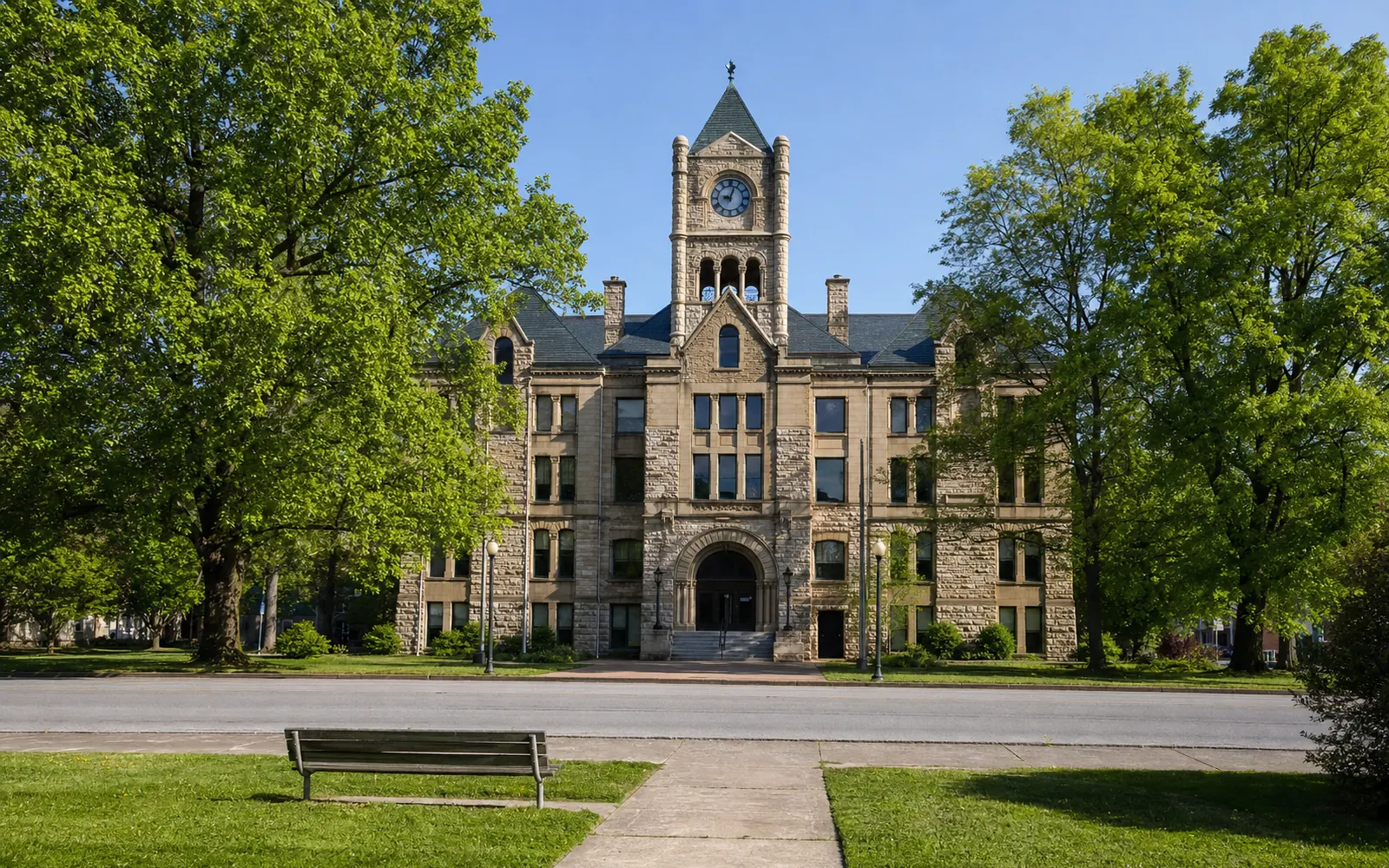
The Civil War was brutal here. The town changed hands four times between 1861 and 1864, and by 1865 no more than six buildings were left standing. Then the Chesapeake and Ohio line through the gorge arrived in 1873, the coal boom followed, and the town did most of its growing between 1900 and 1930. The sandstone courthouse you'll admire today went up just ahead of that boom: construction began in May 1894 and the county accepted the building on November 22, 1895, according to its National Register nomination. The founding and Civil War history has the full story.
Then came the bridge. It opened on October 22, 1977 and cut the crossing of the gorge "from approximately 40 minutes to less than one minute," as the town's 2024 plan puts it. The town's population grew more than 38 percent between 1970 and 1980, the bridge's National Register nomination notes. Congress made the gorge a national river the next year, and Fayetteville "became known as an outdoor mecca." The 2020 upgrade to national park and preserve, the plan adds, "has ignited an influx of visitors." How the rafting companies remade the town is told in the rafting story.
Court Street, the courthouse and downtown
Downtown is where you'll want to spend your evenings. The sandstone courthouse fills the block between Wiseman and Maple avenues, and around it spreads the Fayetteville Historic District, listed on the National Register in 1990, with more than 120 buildings by the town's count. Along Court Street and WV 16 you'll find art, books, clothing, crafts, gifts and a good run of restaurants, while the U.S. 19 strip handles the Walmart and Lowe's errands. Look out for the Altamont Hotel of 1897 to 1898 on Fayette Avenue and the E. B. Hawkins House, both individually listed alongside the courthouse. The town plans numbered historic plaques keyed to a guidebook.
And the food. Fayetteville punches well above its size: Pies & Pints, the pizza-and-craft-beer spot that grew into a regional chain, started here on West Maple Avenue in 2003, and there's a converted-church breakfast cafe, breweries and tap houses around town. The eat and drink guide has them all, and the outfitters' storefronts and bike shops are in the gear shops guide. Once you've parked, the town is easy on foot, as locals on Reddit point out.
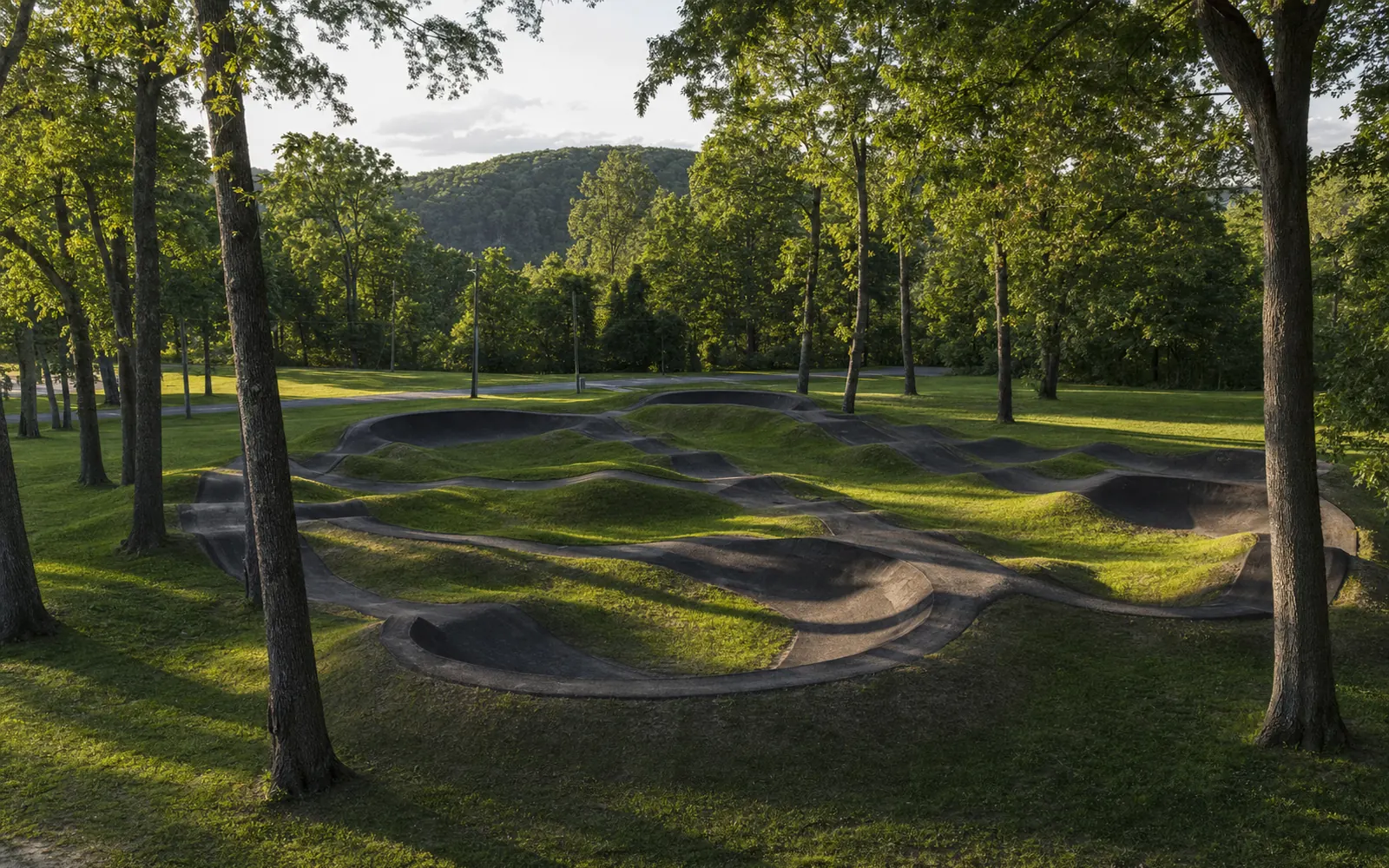
Traveling with kids or a dog? Charlie McCoy Town Park on Park Drive, half a mile from downtown, has ball fields, a splash pad, two dog parks, a 10,000-square-foot paved pump track and a bike skills area, plus a trailhead into the national park.
What the town has been called
Travel magazines keep finding Fayetteville, and it's easy to see why.
| Year | Recognition |
|---|---|
| 2006 | Budget Travel, one of the top 10 "Coolest Small Towns in America" |
| 2013 | Blue Ridge Outdoors, "Best River Town" |
| 2021 | Smithsonian Magazine, second of "15 Best Small Towns to Visit in America" |
| 2026 | U.S. News named the New River Gorge the top underrated U.S. destination, announced at Canyon Rim on March 31 |
Getting around town: parking and visitor info
Parking is the one real headache, especially on Court Street, which the town's own plan calls "particularly troublesome." Street parking is off limits from 1 AM to 6 AM under the town code, with a $150 fine, so don't leave the car out overnight. There are no public restrooms downtown. For maps and tips, stop by the Historic Fayetteville CVB at 162 South Court Street (304-574-1500), open Monday 10 to 5, closed Tuesday, Wednesday to Saturday 10 to 5 and Sunday 10 to 3.
October brings two big changes. On Saturday, October 17, 2026, Bridge Day closes U.S. 19 and the bridge from 7 AM to 5 PM for what the Park Service calls West Virginia's largest one-day festival, so read the Bridge Day page before you book anything that weekend. And U.S. 19 resurfacing from the bridge north to Hico, which began March 30, 2026, is scheduled to run through at least June 2027, so allow a little extra time on the drive north.
What's new in town for 2025 and 2026
The headline is Hill Hall Hotel, which opened August 28, 2026 in the former school at 135 High Street, with 40 rooms from $225 and a restaurant, Patsy's, so you can finally stay in a proper hotel and stroll to Court Street. Wanderlust Creativefoods on Maple Avenue closed at the end of October 2025. In July 2026 the town won a $325,000 grant for a pedestrian bridge on Second Avenue, and West Virginia American Water is replacing a water main on Fayette Avenue through late October 2026. The what's new page keeps the full dated list. Staying downtown? The map on this page shows live prices on rooms and rentals in and around town.
A real town, not a resort
Part of Fayetteville's charm is that people genuinely live and work here, and visitors keep it going: arts, recreation, lodging and food employ more residents than any other industry, and that employment "has doubled," says the town's plan. The Park Service estimates park visitors spent $95.5 million in gateway communities in 2024, supporting 948 jobs across the region. Coal hasn't vanished from the county, either: Fayette County produced 3.2 million tons in 2019, and National Geographic reported county mining jobs at about 600, half the figure of a decade earlier.
Growth has its pinch points. The plan counts "approximately 100 short term rentals in town limits" and names lost housing, parking, missing sidewalks, patchy cell service and water outages among the town's challenges. Mountain State Spotlight heard from residents worried about rental buyers pricing out workers, and 100 Days in Appalachia described "a growing divide" over tourism in 2025. The best way to repay the welcome: park legally, tip your guides, and spend your money at the local shops and kitchens.
The numbers, for the curious: the plan gives a median household income of $63,514 (against $50,090 for the county), 1,365 housing units, 75.1 percent owner-occupied, and a median home value of $141,200. The population grew from 413 in 1900 to 2,887 in the 2020 census, and the plan projects a gain of 105 people by 2035.
| Census year | Population |
|---|---|
| 1900 | 413 |
| 1930 | 1,143 |
| 1950 | 1,952 |
| 1970 | 1,712 |
| 1980 | 2,366 |
| 2000 | 2,754 |
| 2010 | 2,892 |
| 2020 | 2,887 |
The town has a mayor, a recorder and five council members; the 2026 directory lists Mayor Sharon Cruikshank and Town Manager Matt Diederich. Council meets the first and third Thursdays at 6 PM at Town Hall, 125 North Court Street (in person or on Zoom), and Town Hall is open weekdays 8 AM to 4 PM at 304-574-0101. Since 2021 a 1 percent municipal sales tax has funded stormwater work, parks, parking and signage, historic preservation and the municipal building, so a bit of every purchase goes back into the town. The county offices are in the courthouse at 100 Court Street, and the county visitor bureau, the New River Gorge CVB, is in Oak Hill.
Where to go next
- Attractions: the bridge, the overlooks, Thurmond and what is open now
- Rafting, climbing and outfitters: the New and Gauley rivers, guide prices and how to choose a company
- Trails: hikes and bike loops with distances and current closures
- Places to stay: cabins, hotels, resorts and campgrounds around the gorge
- Where to eat and drink: restaurants, breweries and bars in and near town
- Events: Bridge Day, Gauley season, festivals and the full calendar
- Plan a trip: when to go, getting here, costs and park rules
- Day trips: Hinton, Summersville Lake and the Midland Trail
- Nature: waterfalls, fall color, geology and wildlife
- History: the founding, the coal towns and how the river became a national park
- Stories: longer reads on the town and the gorge
- Shopping: gear shops and local makers